
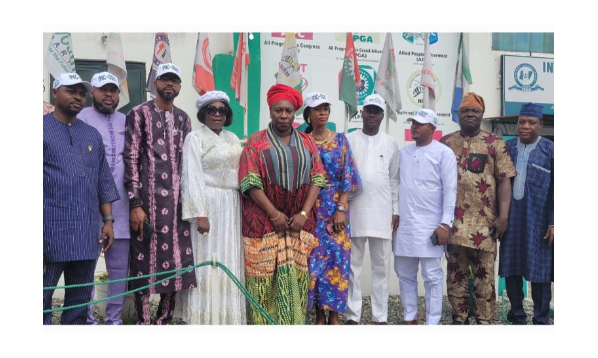
The political battlefield in Ogun State is beginning to take shape, and the tone is unmistakably strategic. The Inter-Party Advisory Council (IPAC) has effectively drawn an early line in the sand by recognizing only three governorship aspirants—Senator Iyabo Obasanjo, Gboyega Nasir Isiaka, and Sarafa Tunji Ishola—despite a wider field of contenders.
This is not just administrative protocol; it’s political signaling at scale. IPAC, which brings together chairmen of all registered political parties in the state, is positioning itself as a de facto credibility filter for aspirants. In practical terms, it’s setting a benchmark: if you haven’t engaged with the council, you’re not yet in the conversation.
Chairman Abayomi Sanyaolu made the framework clear—recognition is not automatic, it is earned through engagement. Aspirants are expected to present their vision, defend their plans, and demonstrate readiness to govern before they can be taken seriously by the council.
That approach introduces a layer of structured accountability into what is often an unfiltered political race. By insisting on formal interaction, IPAC is attempting to force a level of transparency and early-stage scrutiny that could, in theory, improve candidate quality and reduce political noise.
The underlying message is equally important: experience matters, but preparedness matters more. The council’s stance reflects a growing demand for governance-focused campaigning rather than personality-driven politics.
Senator Iyabo Obasanjo’s visit underscores this shift. Her emphasis on collaboration and dialogue aligns neatly with IPAC’s positioning—framing the electoral process not as a zero-sum contest, but as a system that requires stability, communication, and issue-based engagement to prevent electoral violence.
From a governance perspective, IPAC is essentially acting as an early-stage quality assurance mechanism. Whether aspirants choose to engage or ignore this platform will likely influence their perceived legitimacy as the race intensifies.
The bottom line is simple: in this evolving political environment, visibility alone is no longer enough. In Ogun State’s 2027 race, access to influence is being quietly redefined—and those who fail to engage early may find themselves operating at a strategic disadvantage when it matters most.