
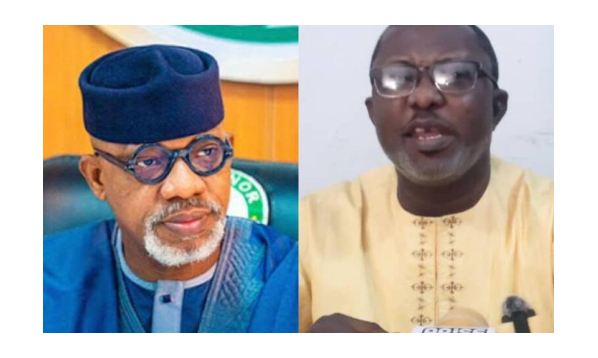
A fresh political narrative is emerging in Ogun State as socio-political advocate Arabambi Abayomi calls on Governor Dapo Abiodun to secure his legacy by ensuring an indigenous-led succession ahead of the 2027 governorship election.
In a strongly worded statement, Arabambi warned against what he described as the risk of “hostile succession,” urging the governor to prevent external or non-indigenous political influence from shaping the state’s leadership transition. He framed the 2027 election as a defining moment for preserving local identity, political continuity, and cultural heritage.
The advocate anchored his argument in Yoruba cultural philosophy, stressing that governance in Ogun State must reflect its deep-rooted traditions and indigenous structures. Drawing from literary references, he likened the political climate to a system that risks losing its historical grounding if leadership is detached from its ancestral base.
Arabambi emphasized that while Ogun remains open to residents and investors from across Nigeria, the governorship—unlike other offices—carries a symbolic responsibility as a custodian of cultural identity for groups such as the Egba, Ijebu, Yewa, Awori, and Remo.
He also raised concerns over the potential influence of external political and financial actors in the upcoming election, warning that such interference could disrupt what he described as a necessary internal political succession among indigenes.
With Governor Abiodun set to complete his constitutionally allowed two terms in 2027, Arabambi framed the moment as a critical leadership test, suggesting that the governor’s actions now could shape how history evaluates his administration.
He urged the governor to engage traditional rulers, political stakeholders, and community leaders to build consensus around indigenous leadership, rather than allowing external pressures to dictate outcomes.
The intervention highlights growing political positioning ahead of the 2027 elections, with debates over identity, representation, and succession already taking center stage in Ogun State’s evolving political landscape.