
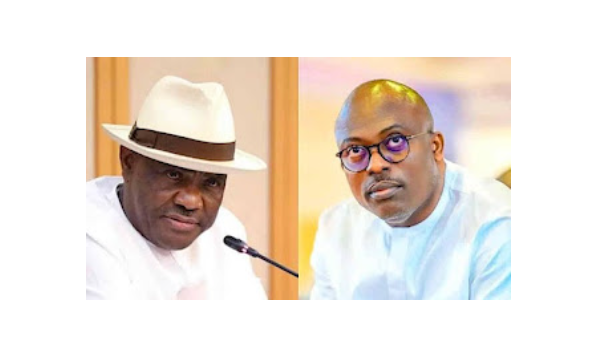
Political tension is building in Rivers State as early permutations for the 2027 governorship election gather momentum, with loyalists of former governor Nyesom Wike positioning to challenge Governor Siminalayi Fubara.
At the centre of the emerging dynamics is a quiet but strategic coalition reportedly backed by Wike, aimed at producing a consensus candidate capable of confronting the incumbent if he seeks re-election.
Governor Fubara has yet to publicly declare his intention for 2027, a silence that analysts say is already reshaping the political equation. The uncertainty has created room for rival blocs to consolidate influence, test alliances, and quietly build structures.
Two key figures have so far emerged within the Wike-aligned camp. Kingsley Chinda, a seasoned lawmaker representing Obio-Akpor Federal Constituency, is widely viewed as a loyal ally of Wike, particularly during the state’s recent political crisis.
Also gaining traction is Marcus Eji, a former member of the Rivers State House of Assembly, whose political profile has reportedly risen following a recent introduction to President Bola Ahmed Tinubu during a private meeting in Abuja.
Insiders indicate that consultations within the coalition are intensifying, with a clear objective to present a single, formidable candidate with cross-party appeal. However, the coalition’s final direction may depend largely on Fubara’s next move.
Should the governor enter the race, the bloc is expected to back a challenger on an alternative political platform. Conversely, if Fubara opts out, the same coalition may consolidate within a dominant party framework to push its preferred candidate.
Wike, who remains a dominant force in Rivers politics, has publicly downplayed succession speculations, insisting that competence—not ethnicity—will guide his decisions. He also stated that he has not endorsed any governorship aspirant, maintaining that his current political focus is on supporting President Tinubu’s second-term ambition.
Despite these assurances, signs of a widening rift between Wike and Fubara persist. The minister recently suggested he may not back the governor in 2027, cautioning against repeating what he described as past political “mistakes.”
Meanwhile, questions continue to trail Fubara’s political strength following the internal crisis that weakened his support base. While critics argue that his structure remains fragile, his allies insist his grassroots network can be quickly reactivated.
With alliances forming and loyalties shifting, Rivers State is on course for a high-stakes political contest—one that could significantly reshape its power structure ahead of the 2027 elections.